Twenty minutes: that's the time we lose every hour due to unplanned distractions. This alarming figure is part of the findings presented by Edward Hallowell in his book Driven to Distraction at Work: How to Focus and Be More Productive. Worse, he states that we spend more than two hours a day regaining our concentration following these distractions. To summarize, every week, distractions cause us to lose an entire day of work.
What is a weapon of mass distraction?
In recent years, the term “weapon of mass distraction” has become very popular. This expression is the translation of the English term “weapon of mass distraction”. Although it seems to have been used for the first time in the late 30s, it was brought to light in 1997 by a film by Stephen Surjik who made it the title of his work.
A few years later, in 2003, this term was used again by James Corrigan in an article for the London newspaper Independant. He says: “at least, for a few hours today, attention will turn away from George W Bush as America's eyes move from Baghdad to San Diego. Perhaps the Super Bowl will be the weapon of mass distraction Bush was hoping for.”
Weapons of mass distraction in the workplace
According to a survey conducted by the training website Udemy, 3 out of 4 people admit that they get distracted during their working hours. And the trend is only increasing with new generations. Still according to the same survey, 54% of participants stated that distractions have a negative impact on their work.
In fact, these workplace nuisances cost hundreds of billions of dollars each year. An article published in Business News Daily estimates this cost at 650 billion dollars for American companies.
Between emails, phone calls, SMS, and other messaging services, these are all incessant solicitations that require processing and a response. An employee is interrupted by a distraction every 3 to 6 minutes.
Distractions cost time, productivity and above all affect the well-being of employees.
On the subject: Hyperconnected, the brain in danger
Three types of weapons of mass distraction
Distractions do not mix well with a healthy work dynamic. They can be classified into 3 categories:
1 – personal distractions
2 – distractions coming from other people
3 – digital distractions
1 – Personal distractions
They can be diverse and varied. Lack of sleep, stress, an uncomfortable working position, or endless to-do lists are all distractions that prevent us from feeling our best.
Certain details can weigh heavily on our daily tasks and neglecting them would be a big mistake.
Here are some tips that will make your life more pleasant:
- Take care of yourself. A good night's sleep, a balanced diet, and healthy habits will allow you to feel your best at work. This way you will be more productive and have enough energy to enjoy what awaits you after work.
- Get comfortable. When you spend several hours sitting in front of a screen, it is essential to feel comfortable. If you have back or head pain at the end of the day, it is possible that your posture is to blame. Not only is it unpleasant, but it also prevents you from working in good conditions.
- Simplify your to-do list. Finding yourself in front of a too-long to-do list is discouraging and it's the best way to procrastinate. Break down your day by setting shorter-term goals. Nevertheless, don't spend hours arranging your to-do list; besides being boring, it's also counterproductive.
- Refuse multitasking. Multitasking harms your performance. Indeed, by scattering your attention, you lose track of what you are doing and you waste precious time trying to find it again. By breaking down your day into clear tasks to which you can fully dedicate yourself, not only do you gain efficiency but you also take more pleasure in it because it is always pleasant to feel like you are making progress.
Valued, if not implicitly required, multitasking ability is an illusion. Access to much more information at a much faster speed multiplies task changes and interruptions. The brain must keep and manipulate a multitude of elements at the same time. Studies show that this harms efficiency and generates fatigue and stress.
To learn more: Hyperconnected, the brain in danger
«All of humanity's misfortune stems from a single thing, which is not knowing how to remain at rest, in a room.»
– Blaise Pascal
2 – Distractions coming from other people

A noisy workplace, interruptions every three minutes, endless meetings are all nuisances that prevent you from working calmly and efficiently.
Our tips for reducing distractions from your external environment:
- Work in peace. Close your office door or find a place where you won't be disturbed. Inform your colleagues that you wish not to be interrupted for a certain period. This could be headphones, a “Stop” sign, a red light, ... If it's impossible for you to find a quiet place (if you work in an open space for example), there are applications that generate “white noise”, plug in your headphones and enjoy a more soothing work environment.
- Reduce interactions. Interaction at work is not only a necessity but generally a pleasure. If you are constantly interrupted because someone asks you a question, an email arrives, or the phone rings, you cannot maintain a state of concentration. Plan one or more time slots during which you are unavailable. It can even happen sometimes that questions resolve themselves in the meantime.
- Conduct effective meetings. To make your meetings more effective, determine an agenda and stick to it. If other topics come up, they will be addressed at another time. Ideally, communicate a complete brief (up to 6 A4 pages) of the topic discussed. Ask people to read it before the meeting or allocate the first 10 minutes for silent reading. Invite only the people strictly necessary for the discussion. Finally, schedule a time slot for the meeting and respect it.
3 – Digital Distractions

While the invention of the smartphone has certainly changed our lives, its appearance on our desks is perhaps the worst enemy of our productivity. When you are in the middle of a task and a notification appears on your phone or in the corner of your screen, it is natural to glance at it and often difficult to resist. Even if you don't open it, your attention has been lost for a few seconds. An article published on LCI shows that we look at our phone screen an average of 150 times a day. We thus lose several minutes each day and, above all, it is impossible to stay focused for long.
Here are some tips that will allow you to regain precious time:
- Disable all notifications (sound and light indicator). You will quickly appreciate a silent phone. Your smartphone doesn't have to decide for you when to pick it up.
- Activate airplane mode or “Do Not Disturb” mode when you want to stay focused on an important task.
- Close unnecessary programs on your computer. Working on an important presentation? Then you don't need to check your emails or Facebook. So cut out these disruptive elements. The world won't collapse if you're unavailable for a few hours.
- Schedule a specific time slot. Check your emails and other notifications during dedicated time slots. By dedicating 30 minutes 2 to 3 times a day, you save yourself stress and wasted time.
- Clean up your email inbox. Nothing is more anxiety-inducing than an overflowing email inbox. By archiving or deleting messages you no longer need, your inbox will gain clarity. This way you won't feel overwhelmed every time you log in.
The success of a life depends on the ability to forget what is not appropriate for the present moment
– Amma (Mata Amritanandamayi)
In conclusion
A time for everything, everything in its time
When you feel effective, you are less stressed and more fulfilled. If your productivity improves – your company is grateful – you gain serenity and have more pleasure in performing your tasks. By implementing some of the advice given in this article, you reclaim the time that is stolen from you every day.
Adopt new habits to help you control the distractions around you. Review your phone usage and various messaging systems and limit the time you spend on them. Clearly express your need not to be disturbed and create a work environment conducive to productivity. Shorten your to-do list and tackle one task at a time.
These simple measures will allow you and your team to work more efficiently and calmly.
One must learn to remain serene amidst activity and to be vibrant with life at rest.
– Gandhi
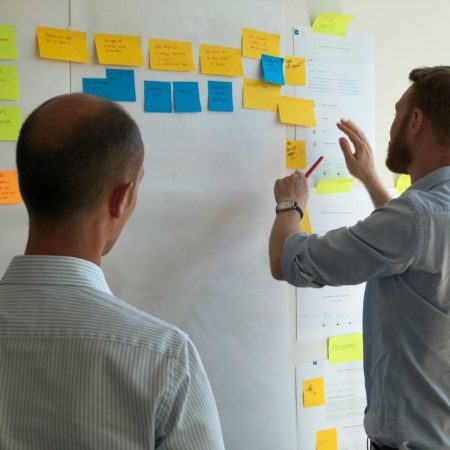
Photo by Dylan Gillis on Unsplash
Photo by William Iven on Unsplash
Photo by William Iven on Unsplash