1
A single platform that retrieves, unifies, and distributes information in real time. From strategic directions to the nitty-gritty details.


We have created for this Swiss toy brand a complete setup integrating all dimensions of the company's activity in order to offer a single platform collecting and disseminating information to all stakeholders, both software and human.
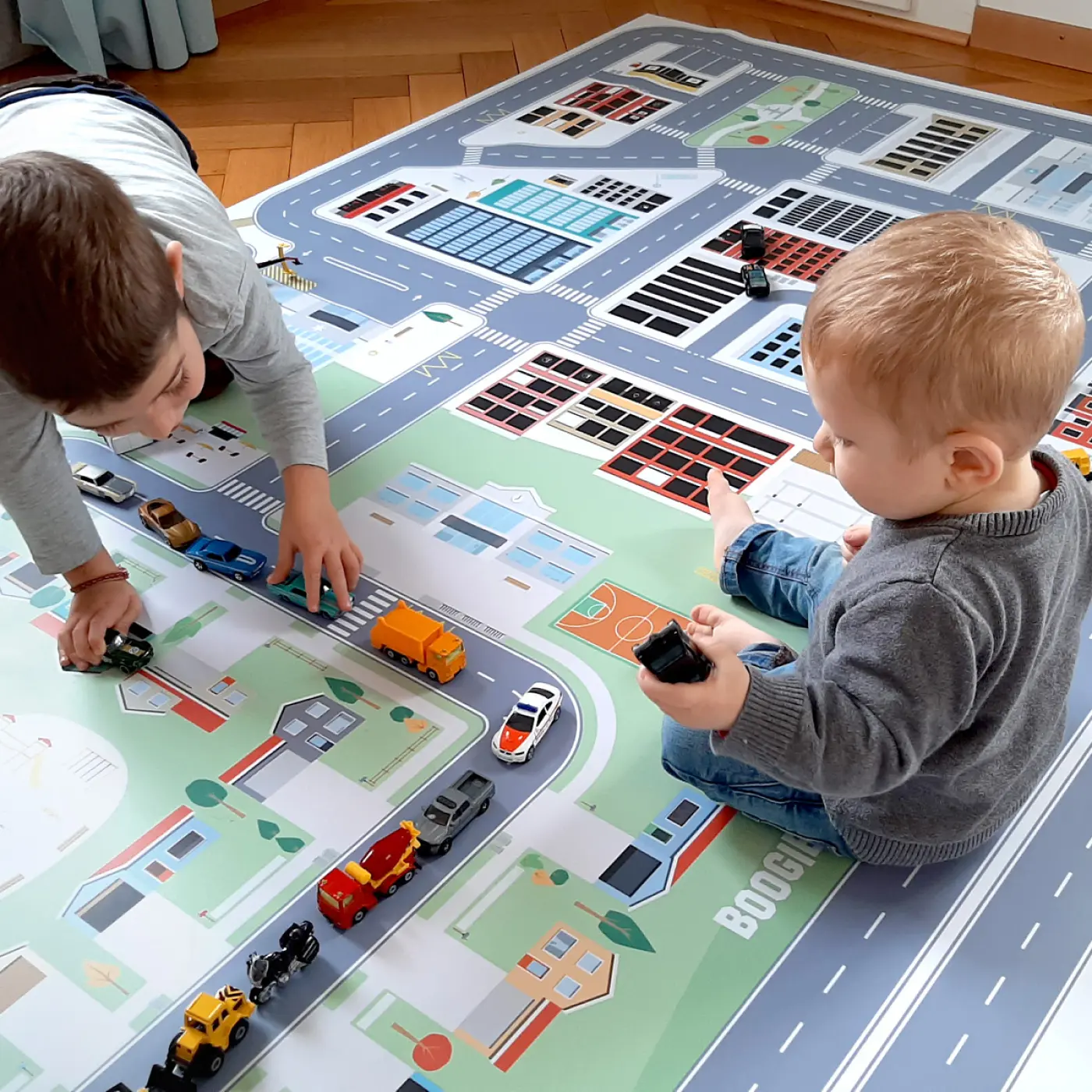
This young Swiss brand sells its products in Switzerland and Europe mainly from its e-commerce site. While it designs and conceives the products in Switzerland, it delegates marketing, production, and logistics to partners in Switzerland, France, and Italy. Its vision is to build a company with global performance. One of its dimensions – both human and economic – is work intelligence.
Like many growing companies, internal and external processes struggle to keep pace. The technological infrastructure is fragmented, relying on a myriad of heterogeneous tools. Sales are made on an online platform, accounting uses a distinct software, marketing another for campaigns, and newsletters a fourth.
This fragmentation extends to collaboration with the ecosystem of external partners, essential for the company's smooth operation. Inventory management, logistics, and manufacturing are handled by service providers who operate on their own systems.
This is why our client chose Monday to manage its operations.
The implementation of Monday has made it possible to move from reactive management to a proactive management. By centralizing data, the team gains a total and real-time visibility across the entire value chain. This single source of truth eliminates information silos, reduces time spent figuring out where things stand, and enables more informed and faster decision-making. From strategic directions to product roadmaps, inventory, marketing content, customer CRM, and daily tasks, everything is in Monday.
We are almost on autopilot for daily operations. It's incredible how Monday has streamlined activity at all levels. All information, from strategic to minute details, no matter where it comes from, in one place.
All processes are subject to advanced automations, freeing up considerable time. For example, replenishment orders are generated based on stock levels, or alerts are issued when certain events occur, such as an order pending for too long, an unaddressed customer request, etc.